Wall Design Trends 2026 — What's Actually Hot, and What Will Outlast the Trend
Wall design trends for 2026 move from screens back to material: monumental formats, hand-made textures, deep earth tones and custom-commissioned art. A professional overview — including what to skip.
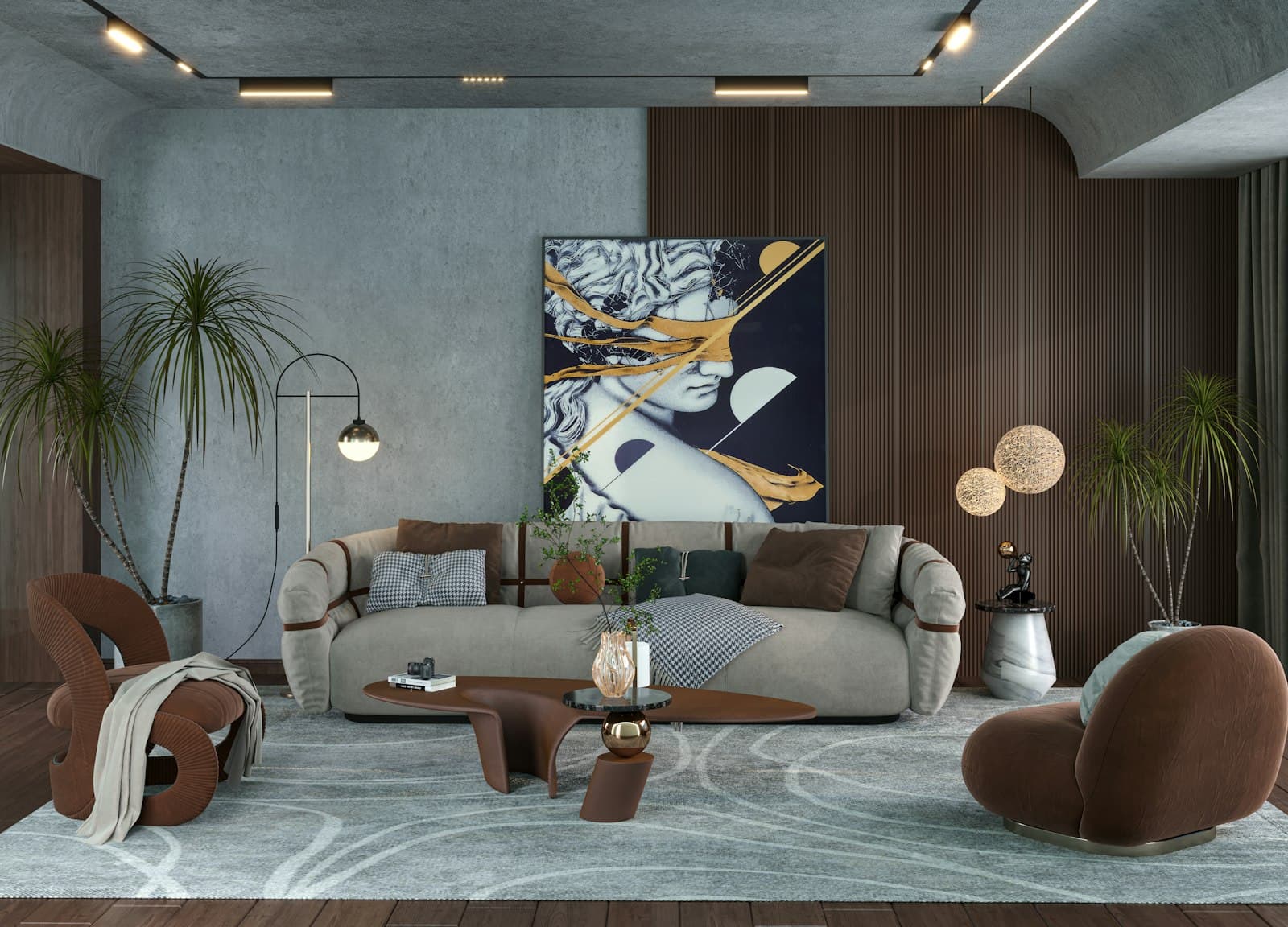
Every January the same 'trends of the year' articles appear, and every December most turn out to have been guesswork. But look at 2026 wall design trends through what's actually happening — the briefs clients open, the proposals artists submit, the works selling in the gallery — and a surprisingly consistent picture emerges. It tells one story: after a decade of screens, people want walls they can feel with their hands.
This overview separates three kinds of trends: what's hot now and will stay, what's hot now and will pass, and what was never a 'trend' at all because it simply always works.
The Central Trend of 2026: Materiality. Things Made by Hand
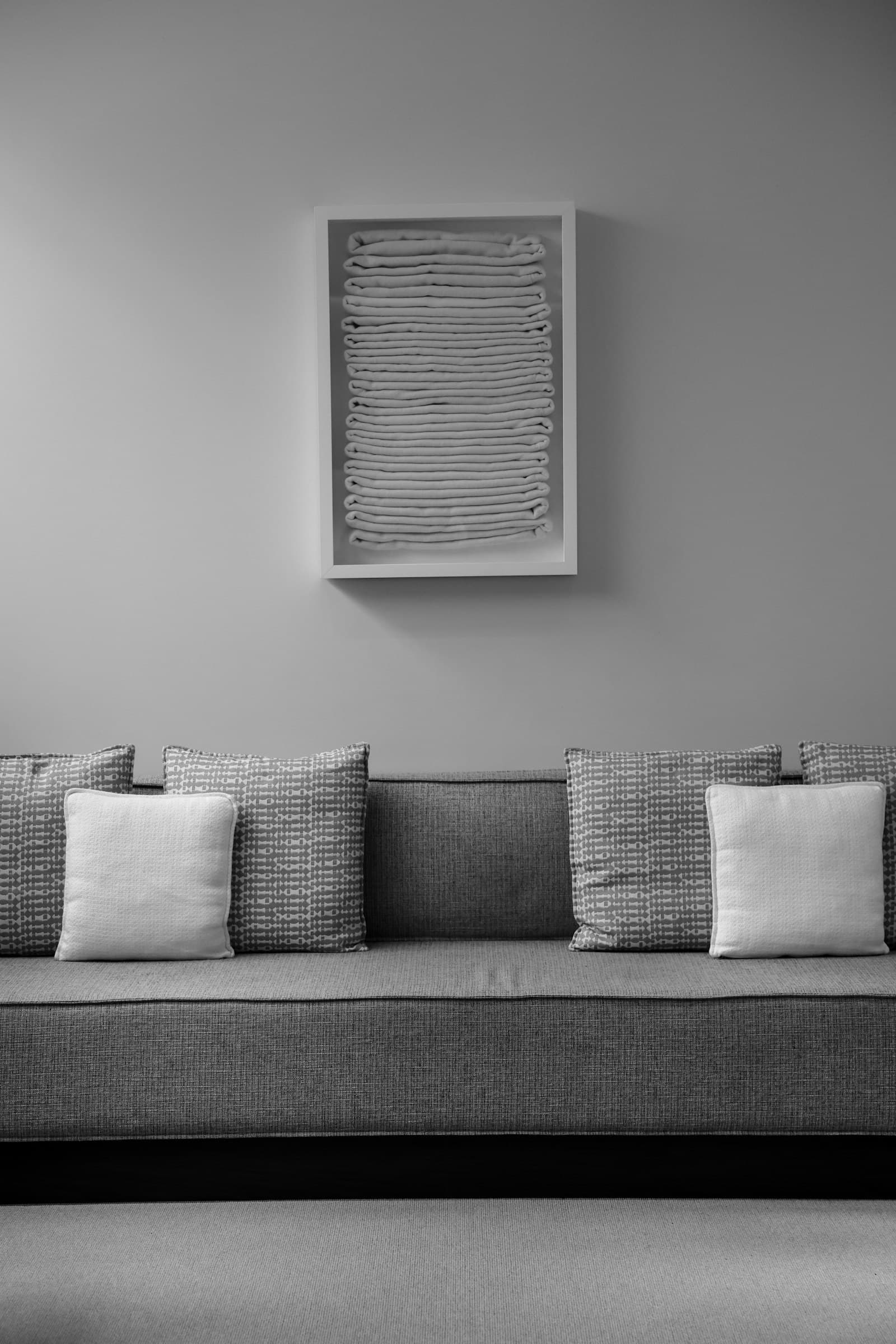
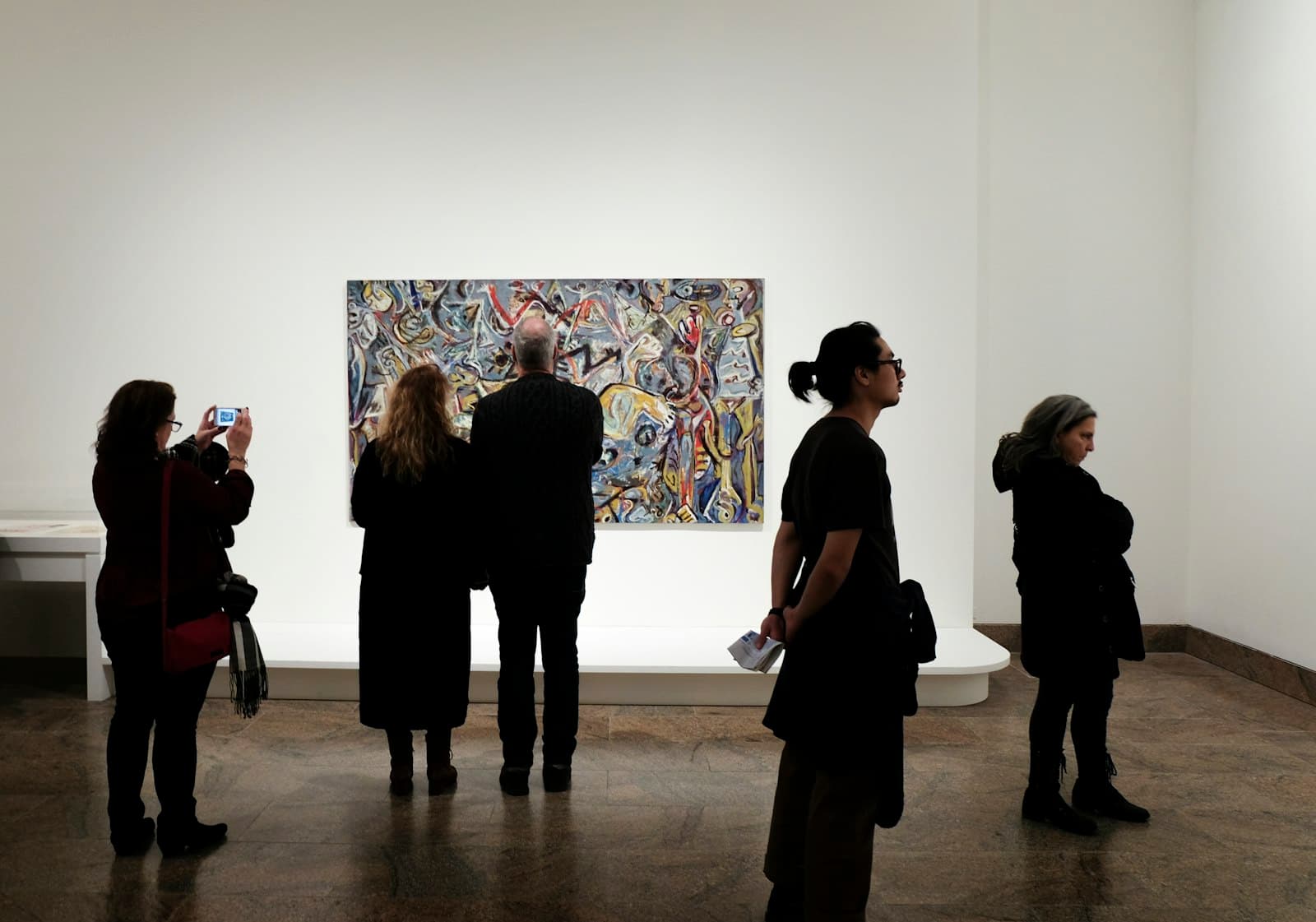
The strongest reaction to an era where every feed looks the same is a renewed appreciation for traces of the human hand: visible brushstrokes, thick layers of paint, handmade paper, imperfect edges. Clients explicitly ask to 'see the brush' — and the most sought-after works are the ones a camera fails to convey, because you have to stand in front of them.
What Else Is Rising in 2026
- Monumental format: one work 150 cm wide or more as the central statement, instead of scattered small pieces — especially in open-plan living rooms.
- Deep earth tones: burnt terracotta, chocolate brown, olive green and rust orange replacing the grey-beige that ruled for a decade.
- Custom-commissioned art: ordering a piece created for the specific home — its colors, dimensions, story — moving from luxury to mainstream.
- Curves and arches: compositions with soft, architectural shapes conversing with the arches that have returned to interior design.
- Diptychs and triptychs: one work split across two or three canvases — the rhythm of a gallery wall with the calm of a single piece.
A quieter but deeper current: the wall as biography. Instead of 'something pretty that matches the sofa', clients commission works that encode a personal story — the coastline of the city where they met, a family song, a childhood landscape. It's a shift in how art's role at home is understood: from decoration to emotional anchor.
What's Fading — and Why
Three things are losing altitude in 2026: generic mass-produced prints (the English quote above the bed, the catalog tropical leaf) — because when everyone recognizes the same print from the same chain store, it stops saying anything about you; overloaded 'more is more' gallery walls — making way for restrained compositions; and the sterile minimalism of the bare white wall — revealed for what it really is: design procrastination.
A good trend isn't what everyone hangs this year. It's what you won't want to take down in a decade.
How to Adopt a Trend Without Regret
The interior designers' rule of thumb: bring trends in through cheap-to-swap layers — textiles, accessories, wall paint — while art is bought for the long term. So the right way to adopt 2026 isn't to 'buy a trend' but to choose a piece the trend merely reveals: materiality, presence and personality aren't passing fashion — they're exactly what good art has always done.
The simple place to start: browsing the walll.art gallery with an eye for the year's palettes and textures — or opening a brief that describes your home, and letting artists submit current proposals designed precisely for your wall. That's how you get 2026 in a version that's also you.
Questions & answers — Inspiration
What are the leading wall design trends of 2026?
Materiality and traces of the hand (brush textures, layered paint), monumental single-work formats, deep earth tones like terracotta and olive green, and custom art created for the specific home. The common denominator: less screen, more material.
Which colors are trending in 2026 wall design?
Deep earth tones are replacing grey-beige: burnt terracotta, chocolate brown, olive green, rust orange and deep burgundy. They connect to the return of natural materials — wood, linen, clay — across the rest of the home.
What's out of fashion in wall design?
Generic mass-produced prints everyone recognizes from chain stores, overcrowded gallery walls, and the sterile minimalism of bare walls. The overall direction: less quantity, more meaning and presence.
Should you buy art according to trends?
Bring trends in through easy-to-swap layers like textiles and paint, and choose art for the long term. The good news: the 2026 trends — materiality, presence, personality — are exactly the qualities of good art in any year.
What is a monumental format and who is it for?
One large work, usually 150 cm wide or more, functioning as the space's single focal point. It especially suits open-plan living rooms and tall walls, and replaces the need for many small pieces.
How do you get a custom piece in the spirit of the trends?
Open a brief with a photo of the wall, the dimensions and the stylistic direction that speaks to you; artists submit current proposals designed for your space, and each is visualized on the actual wall. The chosen proposal becomes an original work created for you.