Minimalism on the Wall — Why One Large Artwork Beats Ten Small Ones
One large artwork does what ten small ones can't: calm, focus, and a sense of intention. On the principle galleries and designers always apply — and how to apply it at home without fearing the size.
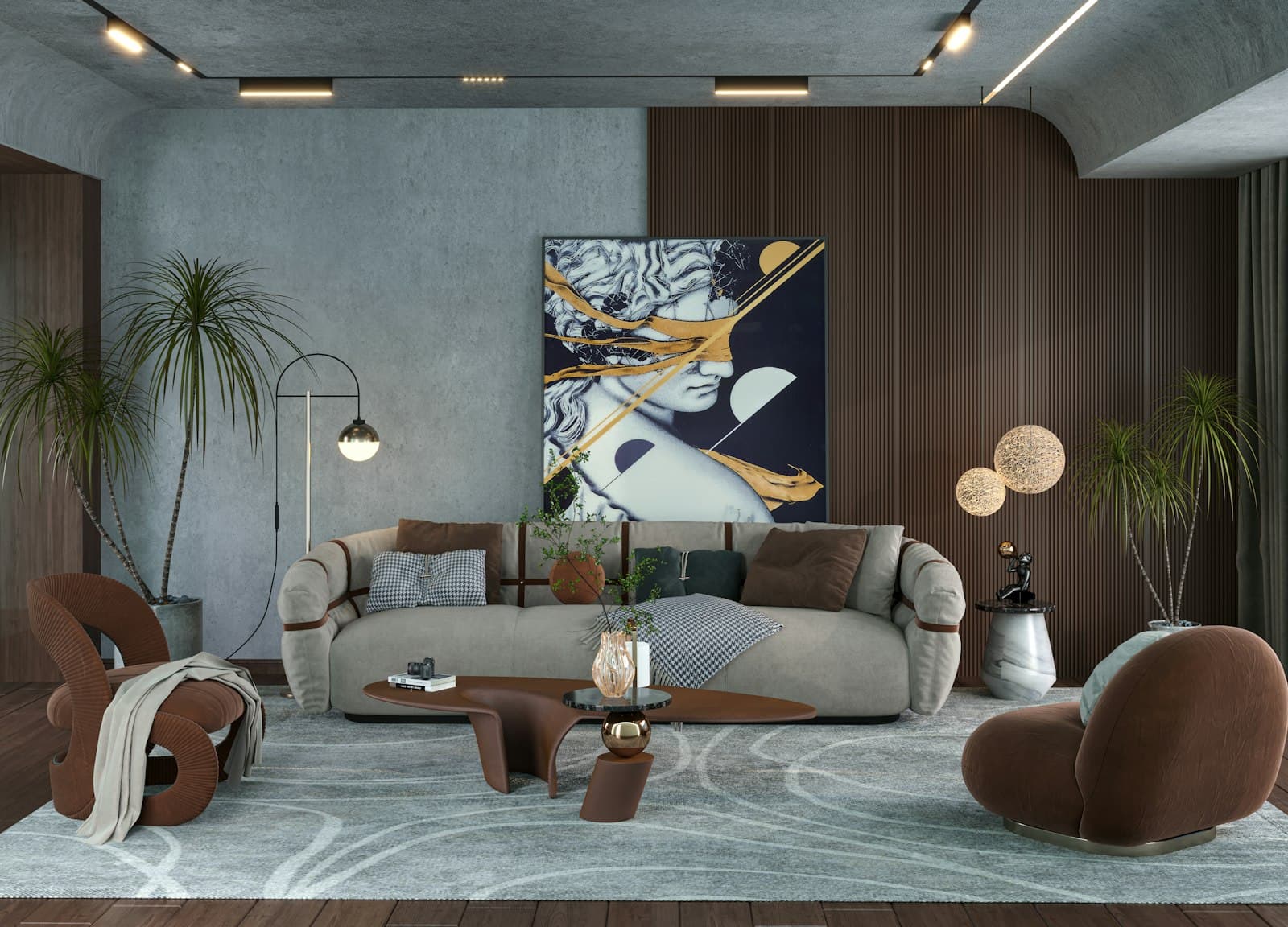
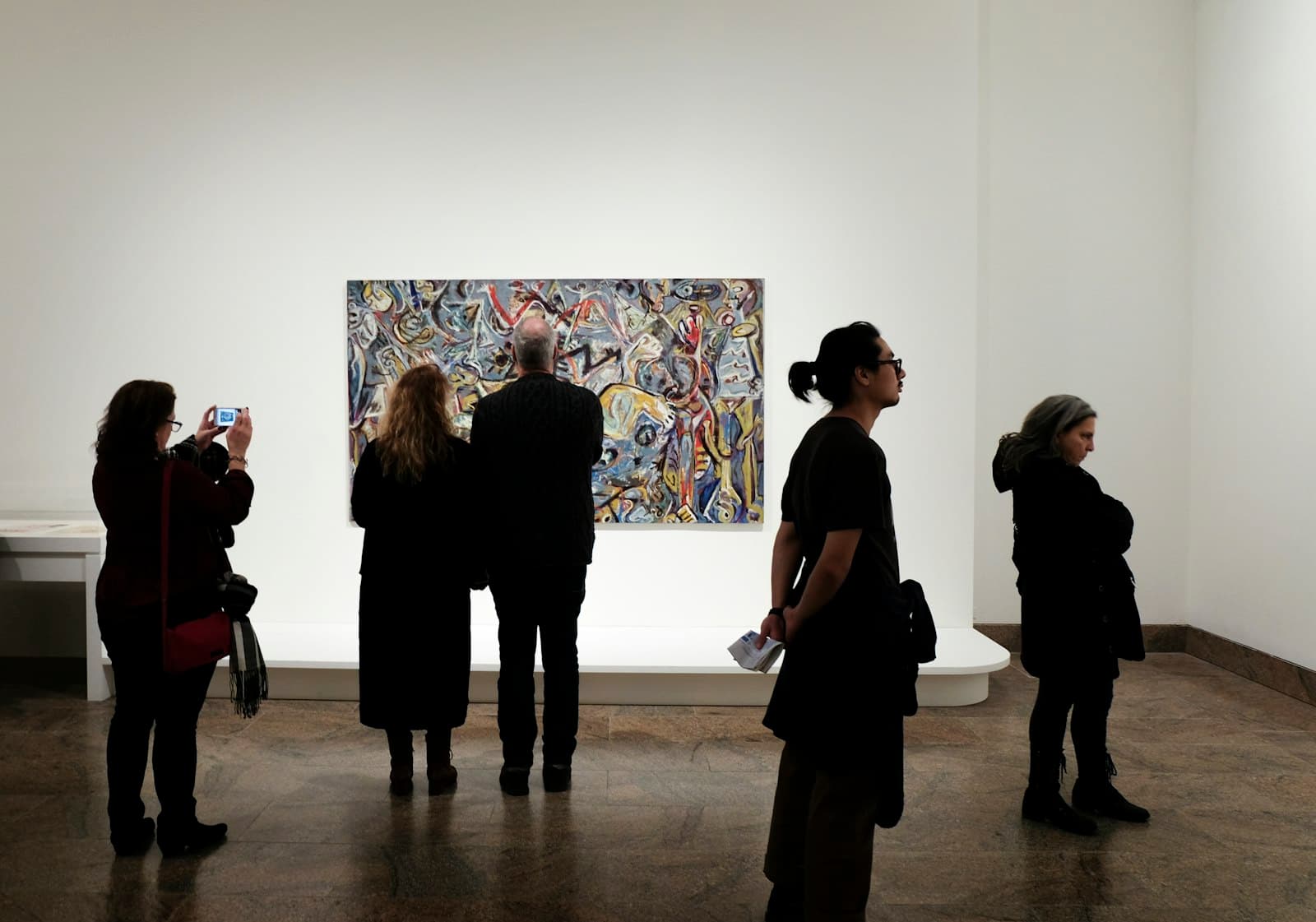
There's a moment that happens to anyone entering a space with one large artwork — a single piece, a single wall, nothing around it: the breathing changes. The eye, used to scanning and skipping between stimuli, suddenly stops. This isn't chance and it isn't 'personal taste'; it's a perceptual principle galleries are built on — and one you can bring home.
And yet most homes go the opposite way: many small works, collected without a plan, scattered across walls that never asked. This article makes the case for one large piece — and for anyone who finds that intimidating, explains how to do it without getting the size wrong.
What Happens to the Eye in Front of One Large Work
Our visual attention works like a spotlight: it can focus on one thing or scatter across many. Ten small works create ten stopping stations — the eye skips, compares, rests in none of them. One large work creates a single deep station: you enter it, wander through it, return to it differently each time. It's the difference between skimming a feed and reading a book.
There's also a surprising spatial effect: one large piece makes a room look bigger, not smaller. It organizes the wall around a single focal point and erases the 'noise' of small items — and the eye reads order as space. Small spaces benefit most, in complete defiance of intuition.
Minimalist Wall Art: The Rules That Make It Work
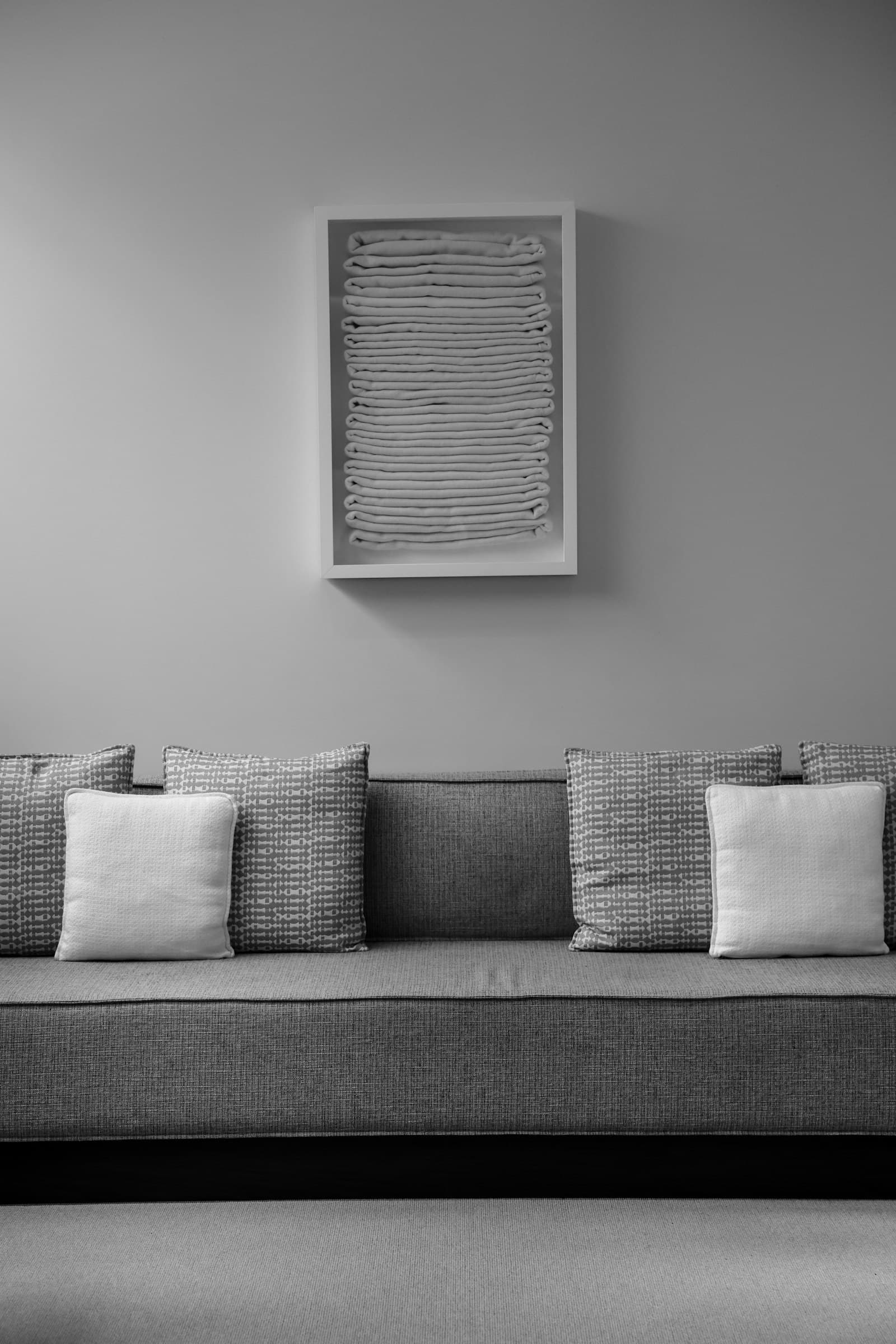
- Size: 60–75% of the width of the furniture below, or 50–70% of a free wall's width. The one mistake that ruins the move is a piece that's large-but-not-enough.
- Air: the magic isn't only in the work but in the emptiness around it. Keep the wall clean — no shelves, no 'one more little thing on the side'.
- Depth instead of clutter: for one work to hold an entire wall it needs layers — texture, color transitions, details revealed up close.
- Lighting: a directed spot or soft indirect lighting upgrades a large piece from 'picture on a wall' to 'presence in the room'.
Minimalism isn't a bare wall. It's a wall where everything on it is there on purpose.
The Economics: One Large or Ten Small?
It's surprising how firmly the numbers back the move: ten small prints with ten frames usually cost more than one large, quality work — and produce less effect. One large piece is also one decision instead of ten: fewer deliberations, fewer holes in the wall, and a result that feels curated rather than accumulated. Weighing cost against presence, the large format is the best deal in the room.
How to Choose the One
When there's only one work, it has to carry weight: to function from a distance as a composition and to reward close viewing. An abstract with depth, an atmospheric landscape or a rich color composition passes that test better than a flat graphic image that's read in a second and done. Most important of all — it has to be something you can meet every day, for years.
Because this decision is a big one, it's worth not guessing: on walll.art you can open a brief with a photo of the wall and its dimensions, receive proposals from artists designed precisely for the proportions of the space, and see each proposal visualized on your actual wall before choosing. For one large work — it's the only way to choose with full confidence.
Questions & answers — Inspiration
Which is better for the living room — one large picture or several small ones?
In most living rooms one large work wins: it creates a calm, deep focal point, makes the room look tidier and bigger, and usually costs less than ten framed prints. A gallery wall suits a collection with a connecting thread and advance planning.
What size counts as a 'large picture' for a living room?
Above a sofa: 60–75% of the sofa's width, meaning usually 140–170 cm. On a free wall: 50–70% of the wall's width. The common mistake is buying large-but-not-enough — an 80 cm work on a 4-meter wall gets swallowed.
Does a large picture make a small room feel smaller?
The opposite — it's one of interior design's surprises. One large work organizes the wall around a single focal point and erases the visual noise of small items, and the eye reads that order as space. Small spaces gain the most from the move.
What style suits a single large artwork?
A work that performs at two distances: from afar as a strong composition, and up close as a world of textures and details. Abstracts with depth, atmospheric landscapes and rich color compositions hold up over years better than a flat graphic image.
How do you avoid getting the size wrong when ordering a large piece?
Measure the furniture or the wall, mark the approximate size on the wall with masking tape and live with it for two days. On walll.art you upload a photo of the wall to the brief and every proposal is visualized on it at true relative size — so you see the result before ordering.
How much does a large custom artwork cost?
In the brief you set the budget in advance, and artists submit proposals within it. Compared with the cost of ten small prints each with its own framing, one large work is usually the better deal — in both price and effect.