When clients deliberate before commissioning a piece, they usually ask about style, color, subject. But the factor that most often determines whether the artwork “sits” on the wall or feels foreign to it is the simplest of all: size. A piece that is too small gets swallowed and feels like a compromise; one that is too large overwhelms and compresses the room. The right size makes everything else look intentional.
The good news: choosing a size is not a matter of gut feeling but of a few simple measurement rules that interior designers have relied on for decades. In this guide we walk through them room by room — living room, bedroom, dining area, and office — with concrete numbers you can check today with a tape measure.
The Basic Rule: Two-Thirds
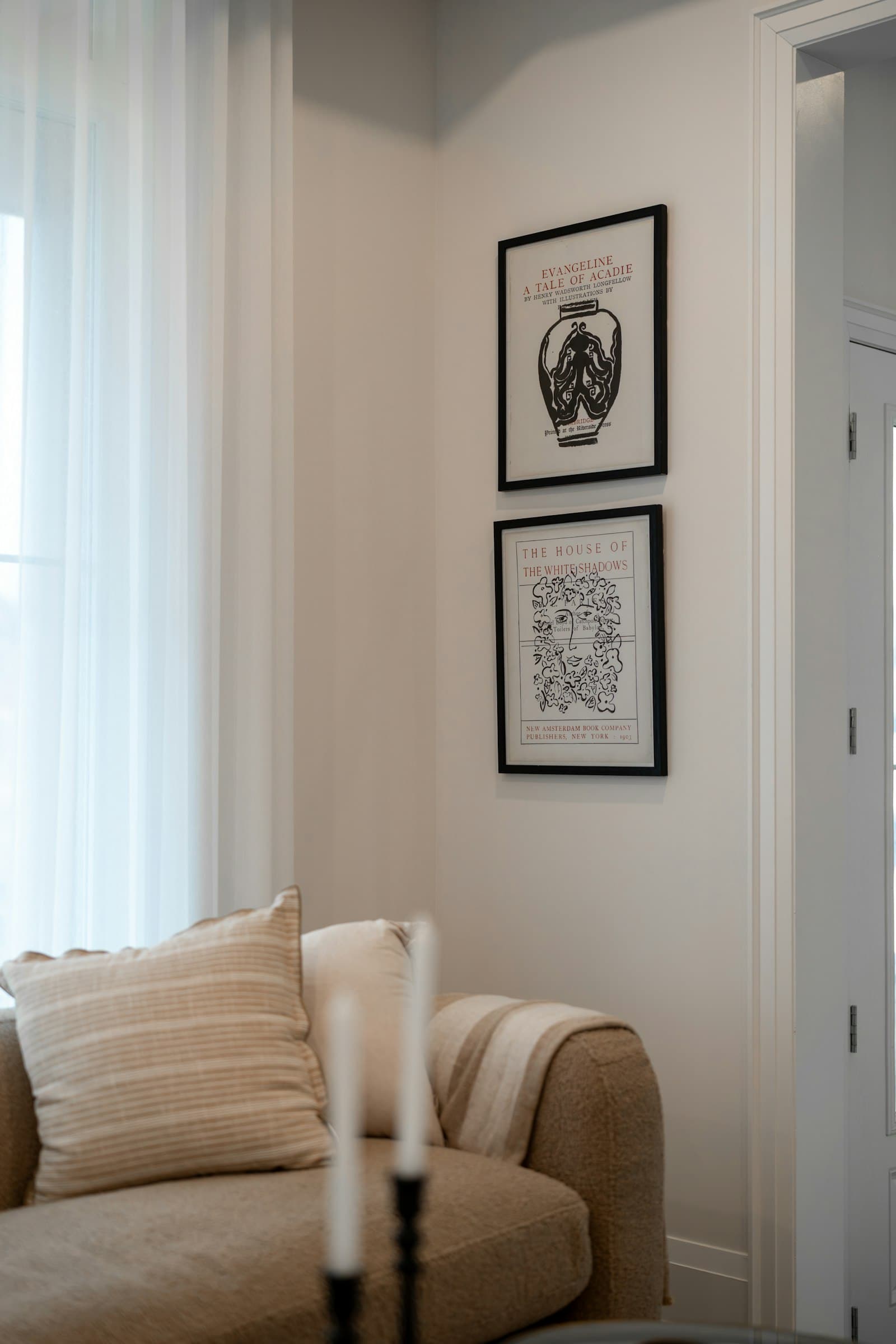
When artwork hangs above a piece of furniture — a sofa, bed, dresser, or sideboard — it should span 60% to 75% of that furniture's width. A 220 cm sofa? The artwork (or a composition of several pieces) should be 130 to 165 cm wide. This ratio creates visual balance: the furniture anchors the artwork, and the artwork crowns the furniture.
When the wall stands on its own, with no furniture beneath — a hallway wall or an entryway, for instance — measure against the wall itself: the artwork should span 50% to 70% of the free wall width, with equal breathing room on both sides. A completely bare wall around a small piece emphasizes its smallness; generous but measured margins emphasize the artwork.
Living Room: The Hero Wall
- Above a three-seat sofa (210–240 cm): a piece 140–170 cm wide, or a diptych of two works at 70–80 cm each.
- The wall facing the TV: one large piece that balances the screen — usually 120–150 cm wide.
- Above a sideboard or console: 60–75% of the furniture's width, with 15–25 cm between the furniture and the bottom of the artwork.
- An open space with a high ceiling: don't be afraid of a large vertical format — it uses the height and feels architectural.
Bedroom: Calm Above All
Above a queen bed (160 cm), the ideal piece is 100–120 cm wide, hung about 20 cm above the headboard. In a bedroom, a horizontal format that rests quietly above the bed works better than a dramatic vertical one that pulls the eye upward. If there's a free wall facing the bed — that's the spot for the artwork you see first every morning, and worth choosing carefully for exactly that reason.
Office and Workspace
In a home office there are two walls worth thinking about: the wall you face while working, and the wall behind you on video calls. Behind your chair, a piece 80–110 cm wide, centered above shoulder line, looks excellent on camera and signals professionalism. Facing the desk, choose something quiet and spacious — an abstract landscape or a calm color composition — rather than a busy piece competing for your attention.
And What About Hanging Height?
The rule galleries work by: the center of the artwork at 145 cm from the floor — average eye level. Above furniture the rule changes: the bottom of the piece 15–25 cm above the furniture line. The most common mistake in Israeli homes is hanging too high; if you're unsure, always come down five centimeters.
No one walks into a room and says “what a correctly sized artwork.” But everyone feels it when it isn't.
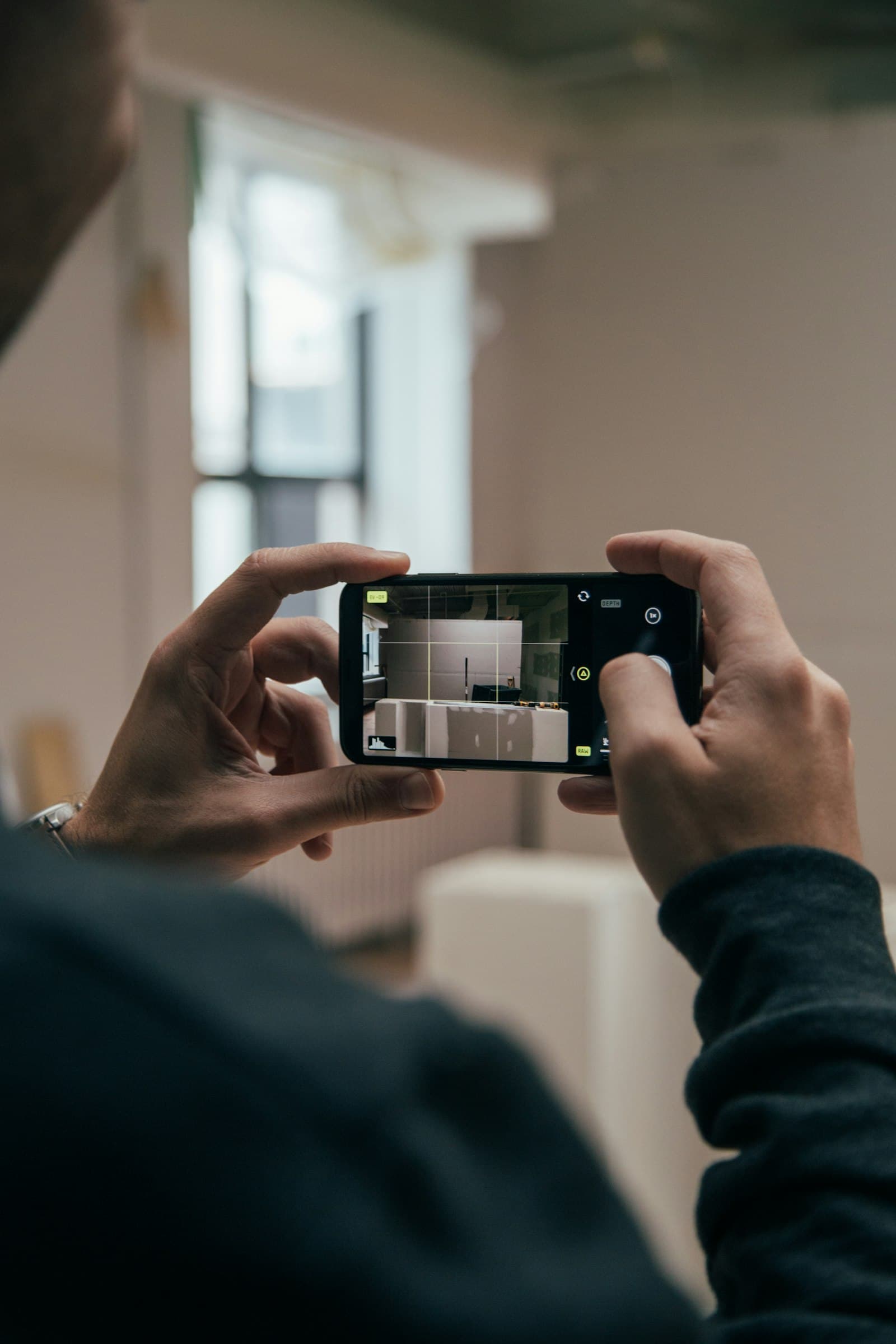
At walll.art there's no need to guess: you upload a photo of your wall, note the measurements, and every proposal the artists submit is visualized on your wall at true relative scale. You see exactly how the piece will sit in the space — before you order, not after you hang.
Questions & answers — Guides
What is the right size for artwork above a sofa?
A piece above a sofa should span 60–75% of the sofa's width. Above a 220 cm three-seat sofa, for example, a work 130–165 cm wide fits well, with its bottom edge 15–20 cm above the backrest.
At what height should artwork be hung?
The accepted gallery rule is the center of the artwork at 145 cm from the floor — average eye level. Above furniture, hang so the bottom of the piece sits 15–25 cm above the furniture line. When in doubt, slightly low beats too high.
Which is better — one large piece or several small ones?
In most rooms, one large piece creates a cleaner, more impressive focal point. A gallery wall of several works suits spaces where a connecting story runs between them and the layout is planned in advance. In a small or busy room, a single piece almost always wins.
How do you measure a wall before commissioning artwork?
Measure the free wall width or the width of the furniture beneath the hanging point, and the floor-to-ceiling height. It's also worth marking the estimated size on the wall with masking tape and living with it for a day or two before deciding.
Is a vertical or horizontal format better for a living room?
Above wide furniture like a sofa or sideboard, a horizontal format integrates more naturally. A vertical format excels on narrow, tall walls, in hallways, and in high-ceilinged spaces, where it emphasizes the room's vertical dimension.
How can I see the artwork on my wall before buying?
At walll.art you upload a photo of your wall and note the measurements, and every proposal is visualized on the wall at true relative scale. You choose size and composition with full confidence — no surprises after delivery.