Art for the Home Office — The Wall That Helps You Focus (and Look Good on Zoom)
Art for a home workspace isn't an indulgence — it's a work tool: the right piece in front of your eyes improves focus, and the right wall behind your shoulders signals professionalism on every video call. Here's how to choose.
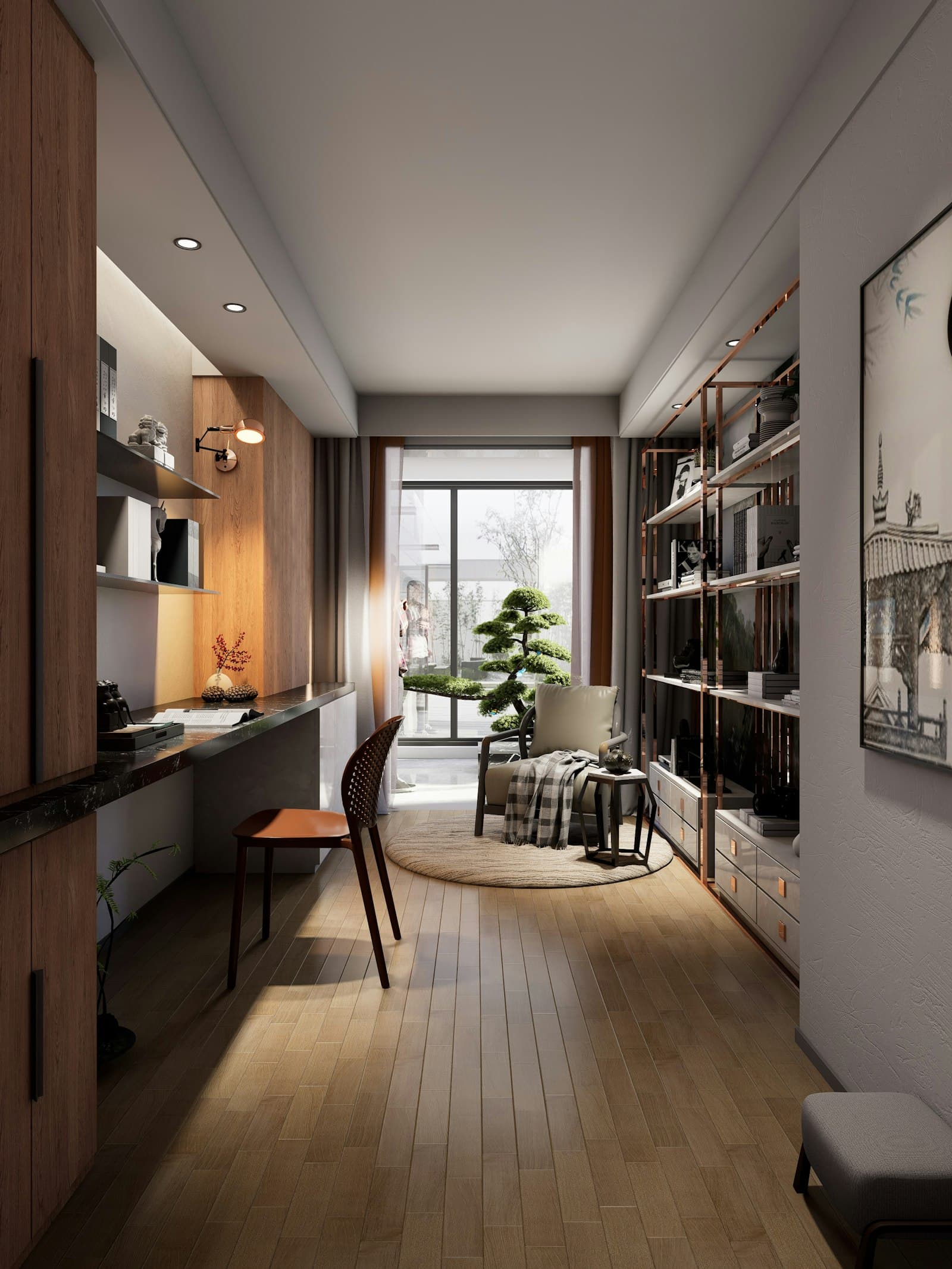
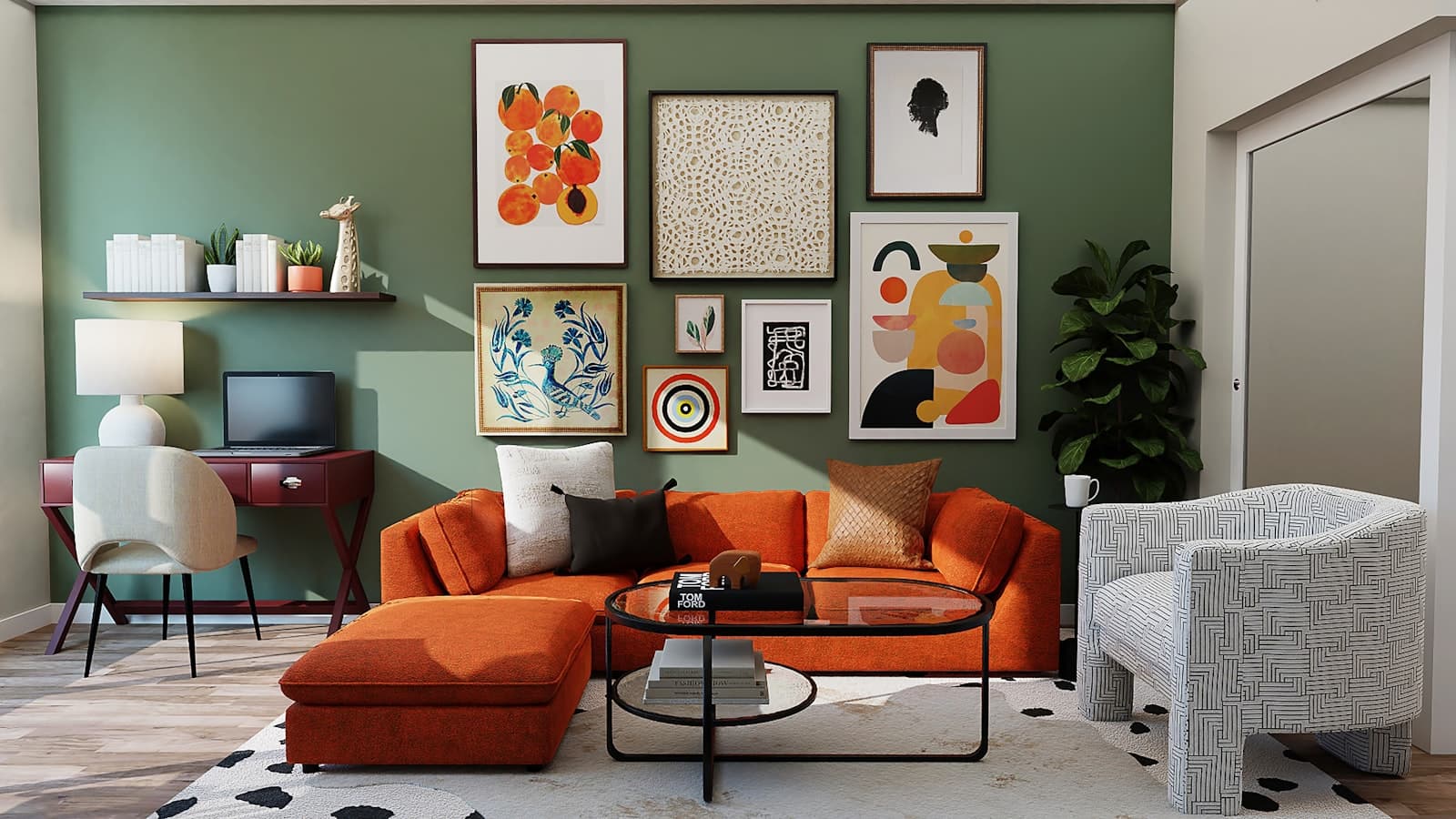
Anyone who works from home spends more hours facing the wall of their workspace than any other view in their life. And yet in most homes it's the most neglected wall: a cluttered corkboard, stickers, or plain empty white. Art for a home office isn't decoration — it's part of the infrastructure of the workday, exactly like a good chair and proper lighting.
A home workspace has two walls with two entirely different jobs: the wall in front of you needs to help you think, and the wall behind you needs to represent you to the world. We'll handle both.
The Wall in Front of You: Art That Supports Focus
Workplace research shows it again and again: a brief glance at a complex-yet-calm visual stimulus — a landscape, an abstract composition, atmospheric depth — lets attention recover better than a blank wall does, without the distraction cost of a screen. The piece facing your desk should be one you can 'get lost' in for twenty seconds and return refreshed.
- Yes: atmospheric landscapes, soft abstracts with depth, blue-green tones that lower the pulse, compositions with a horizon line.
- No: works crowded with small details that pull you into decoding, texts and slogans (the brain reads them over and over), shouting saturated colors.
- Format: one medium-large piece (70–110 cm) beats a cluster of small ones that creates visual noise.
- Placement: slightly above the screen line, so a natural upward glance lands on it without turning your head.
The Wall Behind Your Shoulders: Your Video-Call Backdrop
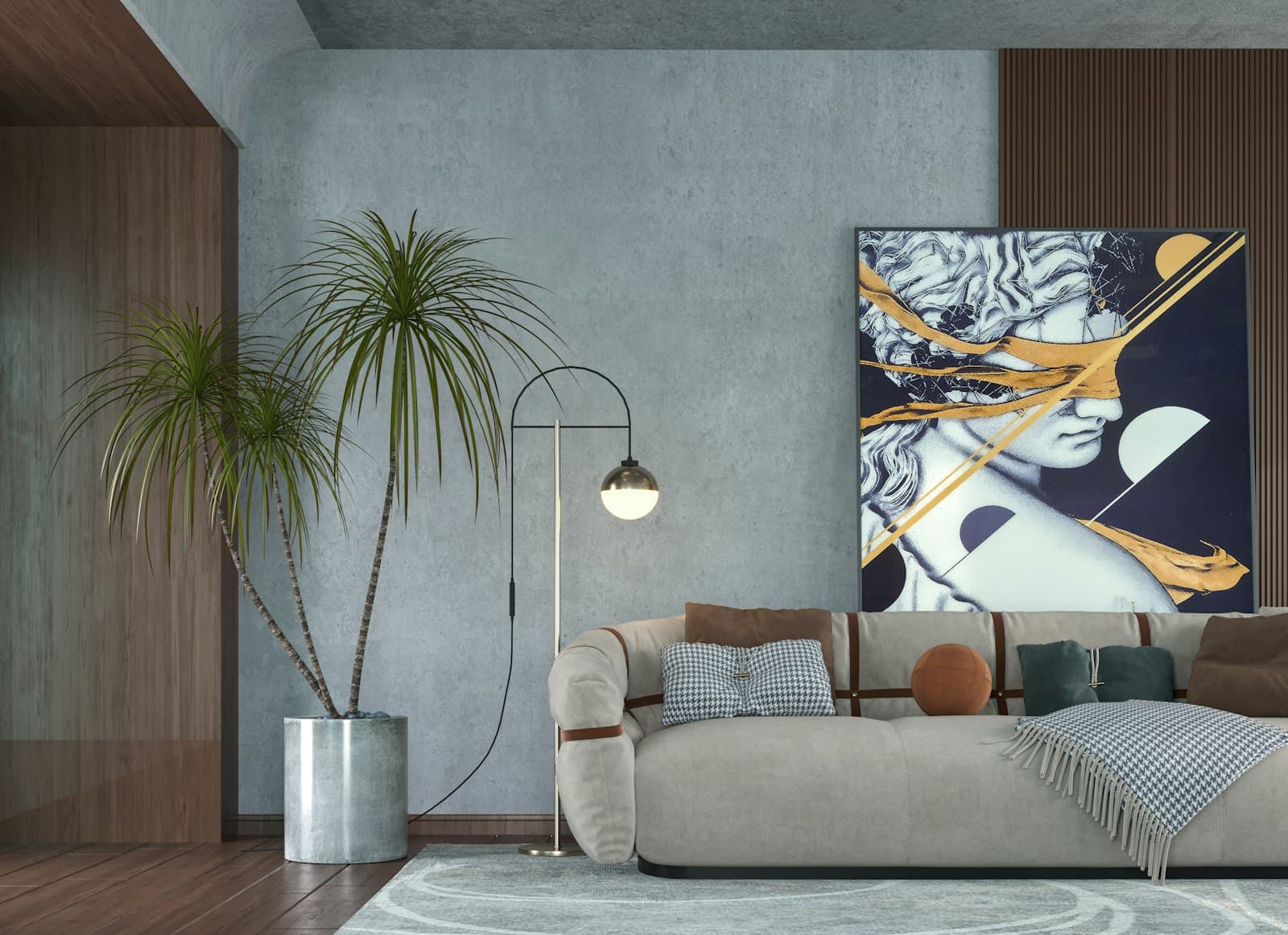
In a world of on-camera meetings, the wall behind you is your business card. A generic bookshelf or a bare wall says 'I didn't think about this'; one artwork, well framed and centered above the shoulder line, says 'there's taste and decision-making here'. On camera, less is more: one striking piece beats a gallery wall that scatters across the frame.
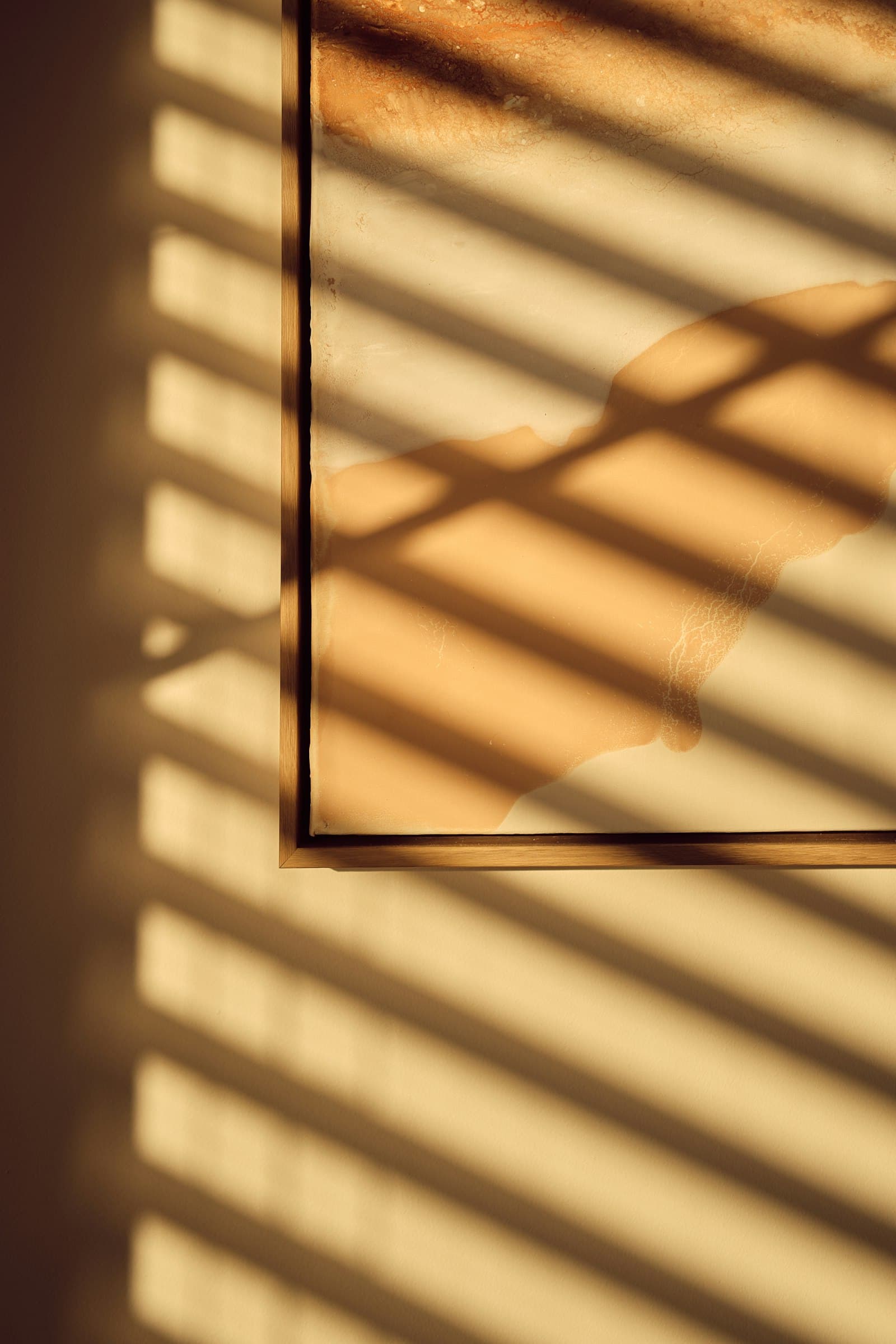
A consideration most people miss: the camera compresses color. A piece that's too delicate disappears in the frame, so for a video backdrop choose a work with clear contrast and a readable shape — one that's recognizable even in a small square of a participant grid. Warm tones (terracotta, ochre, deep burgundy) flatter skin tone on camera more than cool walls do.
The wall in front of you works for you. The wall behind you speaks for you.
When the Workspace Is Also the Living Room (or Bedroom)
In most Israeli apartments the workspace lives inside another room, and the challenge is separation: how does the mind know it's time to work? Art is an excellent separator. A piece in a different language from the rest of the room — cooler, more graphic — marks 'work zone' without a partition wall. At the end of the day, when you shut the computer and turn your back on the piece, the transition home feels almost physical.
And since home workspaces are usually small and specific — a 90 cm niche, a sloped attic wall, a concrete column — a custom commission solves what standard-size shopping can't. Upload a photo of the corner to a brief, artists submit proposals in the exact size and palette, and each proposal is visualized on your wall. The chosen piece arrives ready to hang — and the home office stops feeling like a compromise.
Questions & answers — Home Design
What kind of picture works facing the desk?
A calm piece with depth — an atmospheric landscape, a soft abstract or a composition with a horizon line — in blue-green tones that relax the eye. Avoid detail-crowded works and texts, which pull the brain into repeated decoding and distract.
What art looks good as a Zoom background?
One work with clear contrast and a readable shape, centered above the shoulder line. The camera compresses color and detail, so a piece that's too delicate disappears in the frame; warm tones like terracotta and ochre also flatter skin tone on camera.
Does art actually improve focus at work?
Workplace research indicates that a brief glance at a complex-yet-calm visual stimulus lets attention recover better than a blank wall. The right piece in front of your eyes functions as a built-in micro-break without opening another screen.
What size should a workspace artwork be?
Facing the desk: one piece 70–110 cm wide, slightly above the screen line. Behind the chair for video calls: 80–110 cm centered above the shoulders. One good piece beats a cluster of small ones that creates noise.
How do you separate a workspace inside a living room using art?
Choose a piece for the work corner in a different visual language from the rest of the room — cooler or more graphic — so it marks a 'work zone' without a partition. The stylistic difference creates a psychological boundary that helps you enter and exit work mode.
Can I commission a piece in special dimensions for a niche or a sloped wall?
Yes. State the exact dimensions in the brief and upload a photo of the corner; artists submit proposals designed precisely for the space, and each is visualized on the actual wall before you choose. Non-standard niches and corners get a piece that fits perfectly.