Art for Clinics and Medical Practices — Calm Your Patients Can Feel
The waiting room is where patient anxiety peaks. The right artwork measurably lowers tension — here's how to choose it well for a clinic, a medical practice, or an aesthetic institute.
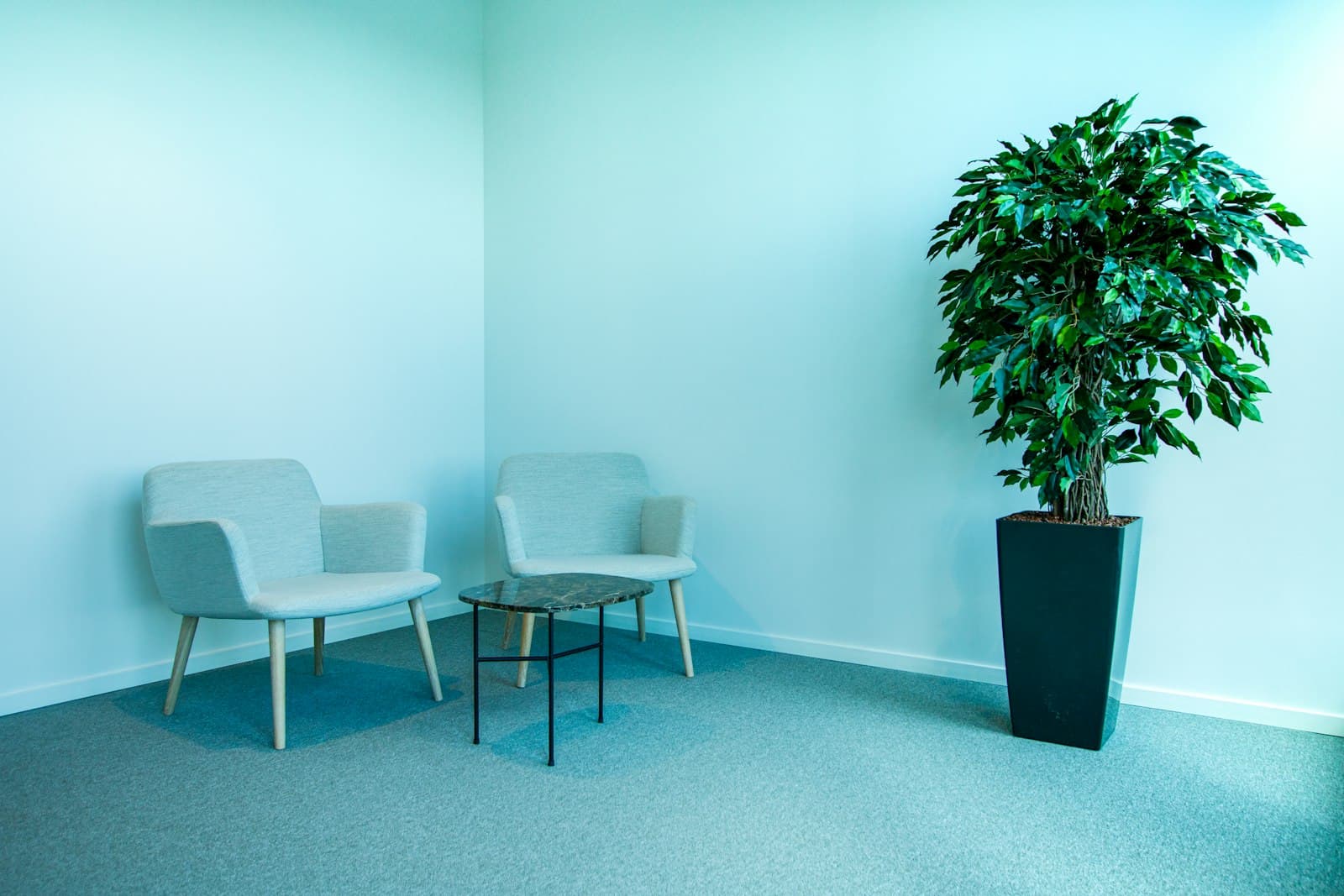
A patient walking into a clinic arrives carrying a load: fear of the treatment, uncertainty about the outcome, sometimes pain. The thirty minutes in the waiting room are the window in which that anxiety either intensifies or settles — and the physical environment plays a central role. Research in healthcare design has found again and again that a calming environment, including art in soft tones with soothing content, reduces perceived stress in patients and improves the entire visit experience.
For clinic owners, that translates into simple business terms: a calm patient is a patient who returns, recommends, and rates higher. A white wall with nothing but diplomas signals sterility; a stock poster of stacked stones signals lack of investment. Original artwork, chosen carefully for the space, signals exactly what a patient wants to feel: that they are in hands that pay attention to detail.
What Works in a Medical Space — and What Harms
- Works: soft abstract landscapes, color fields in balanced cool-warm tones, organic nature-inspired compositions.
- Works: slow visual rhythm — gradual color transitions rather than sharp contrasts, flowing lines rather than broken ones.
- Harms: dominant reds (an immediate bodily association in a medical context), chaotic or aggressive imagery.
- Harms: provocative or ambiguous art — in a waiting room, the anxious mind interprets ambiguity for the worse.
- Golden rule: if the artwork needs explaining, it doesn't belong in a waiting room. The calm must be immediate.
Mapping the Walls: Every Zone Has a Role
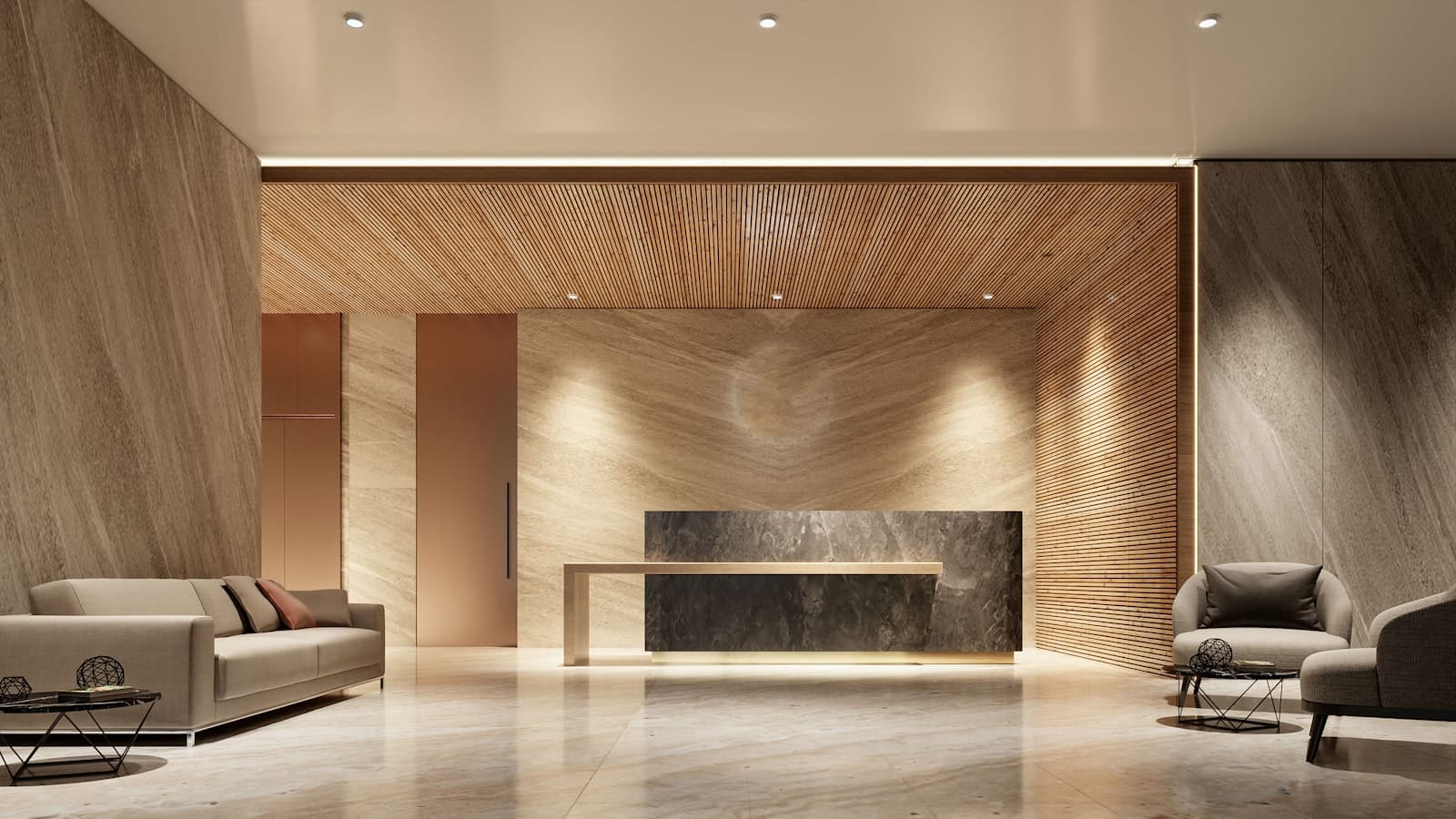
A clinic is not one space but a sequence of moments. At the reception desk, the artwork is part of the first impression — here it may be a touch more present, in the brand's tones. In the waiting room itself the role is reassurance: a large, quiet piece within the sightline of those seated, not behind their backs. In treatment rooms, think from the patient's point of view in the chair or on the bed — sometimes the relevant wall is actually the ceiling or the side wall. And in corridors, a series of smaller works creates an accompanying sequence that softens the transition between rooms.
Tailoring to the Field: Dental, Aesthetics, Mental Health
A dental clinic contends with sharp, short-lived anxiety — there, works with depth to gaze into perform well, giving the mind “somewhere to escape to.” An aesthetic institute sells an outcome of beauty and harmony, so the works should convey refinement and precision, often in a sophisticated monochrome palette. Mental health clinics need the most delicate balance: warm, embracing works, neither too empty nor too busy. In every case, commissioned art lets you tune the palette precisely to the field, the audience, and the branding.
In the waiting room, the wall is the first staff member the patient meets. It's worth making it professional.
How It Works in Practice
Photograph the relevant walls, write a short brief — the clinic's field, the patient audience, the desired mood, and the brand colors — and set a budget upfront. Artists submit proposals created especially for your space, each visualized on the wall photo at true scale. You choose the right work, and the gallery-quality print arrives ready to hang. For a chain of clinics, you can commission a series with a unified visual language that carries the brand across every branch.
The investment is priced upfront and fully controlled, and the result works on every patient, at every visit, for years. Few clinic upgrades give so much for so little maintenance.
Questions & answers — Commercial spaces
What art suits a medical waiting room?
Quiet works with a slow visual rhythm: abstract landscapes, soft color fields, and nature-inspired compositions. Healthcare design research points to such content as stress-reducing, whereas sharp contrasts and chaotic imagery can actually heighten anxiety.
Which colors are recommended for clinic art?
Greens, smoky blues, and soft earthy tones instill safety and calm. Avoid dominant reds in a medical context and glaring yellows across large areas. A palette balanced between cool and warm works in almost every field of care.
Can the works be matched to the clinic's branding?
Yes. In the brief you note the brand colors and the desired mood, and the artists weave them into original works. The walls calm patients and reinforce the clinic's identity in the same move.
How much does it cost to upgrade a clinic with artwork?
You set the budget in advance, starting from ₪1,500 per work — the price of the original artwork alone; gallery-quality printing, framing and shipping are priced separately, in a transparent price list. For a chain or a large clinic, you can commission a series of works in a unified language within a defined budget.
Are the prints durable in a medical environment?
Yes. Gallery-quality prints are produced on durable materials suited to prolonged display in a public space, and maintenance amounts to gentle dusting. For spaces with heightened hygiene requirements, note it in the brief and receive suitable adaptations.
How long does the process take for an active clinic?
Usually a few weeks end to end: an open call of 7–21 days for proposals, selection, then production and delivery. Hanging itself is quick and doesn't disrupt operations — it can be done at the end of a single workday.